The Psychology Behind Ceasefire: How Pakistan Brought Rivals to the Table Talk — Planting the Seeds of Hope
✍️ Dr. Muhammad Anwar Professor, Visiting Faculty, Mukabbir University of Science & Technology, Gujrat
📅 2026-04-14 22:23:28
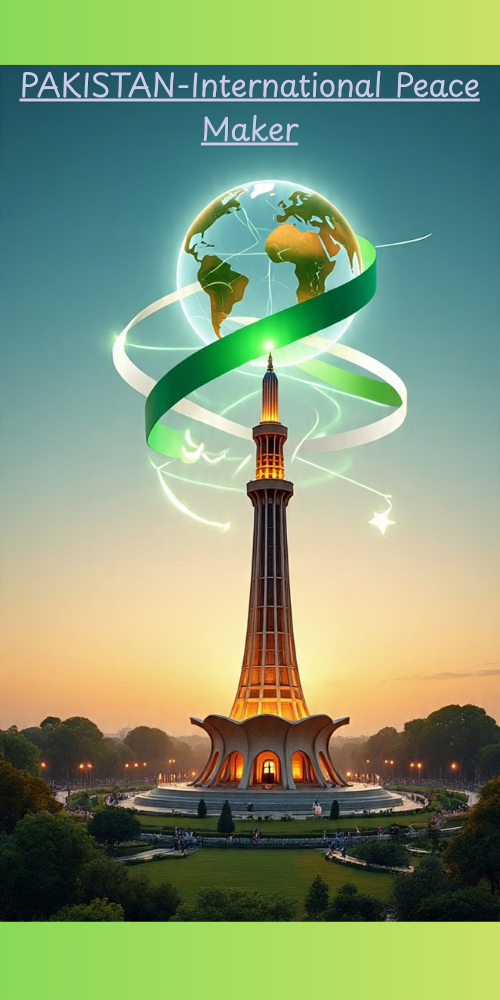
In April 2026, when missiles and drones streaked across the Gulf, resulting in blocked Straits of Hormuz and frozen global oil flow, Pakistan performed an extraordinary feat by bringing the arch rivals US & Iran (engaged in a devastating and revengeful war) to agree on a two-week ceasefire and give a chance to their leaders to hold peace talks in Islamabad. This entailed resolution of conflict through peaceful negotiations (no bombs, no drones, and just the talks). For Pakistan, it was not just the diplomacy but a skillful demonstration of the art of positive psychology.
Peace Psychology and the Key to Ceasefire. Psychology suggests that in every conflict, warring sides look for the cues of safety that allow them to breathe fearlessly and mull over the possibility of reaching a viable scheme of conflict resolution. Hence, the need for a neutral mediator to ensure the provision of a safe venue and facilitation of peace talks. Pakistan, being a friendly country to both the US & Iran, a neutral state in the ongoing war, successfully entrenched its position and went on to convince both the belligerents to agree on holding a two-week ceasefire. It was not just a chance that the top US/Iran leadership agreed to Pakistan’s ceasefire proposal. In fact, Pakistan followed the principles of Peace Psychology that safety first in the conflict is the key to a ceasefire. Pakistan well understood that reducing the immediate threat opens the grounds for holding a ceasefire.
Basic Safety Precondition. Pakistan also secured guarantees from both sides (the US & Iran) that there will be no attacks during the peace talks. This was a fundamental condition of the peace talks.
Maintaining Neutrality. Pakistan maintained its total neutrality and proceeded to bring peace to the region.
Friendly Relations. Pakistan, a Muslim-majority nation, maintained a good brotherly relationship with Iran and the Kingdom of Saudi Arabia (KSA), while there were no US military bases inside Pakistan, which could trouble Iran. Her relations with the US were exemplary, and top US leadership trusted Pakistan as a mediator.
Positive Psychology-No Losers and No Winners. Pakistan followed the principles of positive psychology, which suggested that respect and grace for all sides will be maintained at all costs, knowing that shame triggers aggression while respect offers cooperation. Thus, Pakistan framed the talks to bring a durable and long-lasting peace.
Positive Outcome of Two-Week Ceasefire. No sooner than the warring sides agreed to observe a two-week ceasefire, the entire world felt the relief as oil tankers were allowed to pass through the Strait of Hormuz, and Dubai took a sigh of relief as the markets appeared to be getting stabilized.
Psychological Similar Conditions Produce Fruitful Outcome. Pakistan argued that the US-Iran war is damaging both the US and Iran due to similar economic threats, hence the need for a ceasefire to bring an end to economic chaos (as the flow of oil stopped). As a goodwill gesture, Pakistan asserted to get the Strait of Hormuz opened.
The Peace Talks Failed – Seeds of Hope Planted. Unfortunately, the peace talks failed on Uranium enrichment, Iran’s compensation claims, permanent guarantees for peace, lifting of sanctions against Iran, and status quo on the Petro-dollar. Moreover, on April 20, Israel launched a massive attack on Lebanon. Iran retaliated by hitting the Lavan Island refinery. The US stopped further negotiations, stating that conditions are not yet fully ripe to hold further talks. Iran’s negotiators also departed. It was a setback for Islamabad; however, seeds of peace-making had been planted in the minds of negotiating teams, which suggests that optimism must be maintained and hope for peace must not be lost. Shattered windows can only be repaired through talks. Let us keep the doors of hope open always.